By Steve Hallstrom – Special to The Farmer
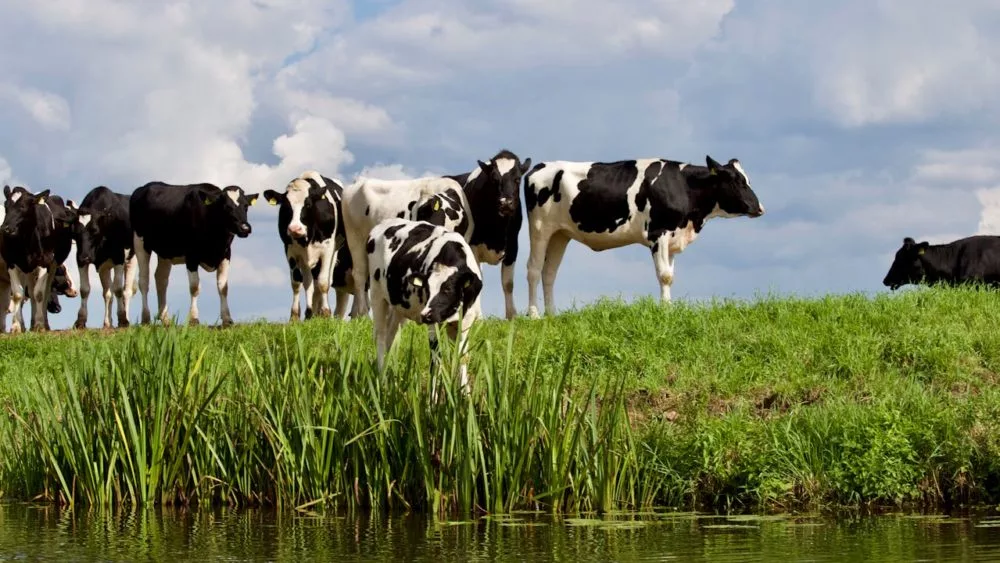
(McKenzie County, ND) — The summer grazing season in McKenzie County begins with a deep green palette, and that’s easy on the eyes for the region’s cattle ranchers.
“It is one of my favorite colors,” laughs Pete Best, of Best Angus Ranch and Quarter Horses. “I grew up in Rolette, North Dakota, so it’s a little different environment here. I guess I’ve always thought of this country as being really brown and not usually looking like this. I’d say this is one of the top three years I can remember, just for the way the grass looks. I mean, it’s thick and green and compared to last year, it’s terrific. I was fairly concerned with all the grasshoppers we had last year and then dry through the summer that the pastures were going to be touch and go or that it would be hard to get them going this spring. But this has been a real godsend”
Titus Stenberg, of VN Ranch near Watford City, agrees.
“I was just looking at the rain totals here for the last couple of months and we’re at 3.89 inches for June and 3.65 inches for May. That is just outstanding after we had a pretty dry winter and April was well below average for moisture. So, we’re thankful for every drop of rain that we get out here. And it’s made a lot of difference in the way things look. You notice that when it’s dry, the cattle start taking more minerals from tubs and needing more supplements, and right now the green grass has given them almost everything they need. We still offer salt and mineral to them, but they’re just taking less because they’re able to get more from nature.”
Speaking of getting more, local ranchers are also getting more when they sell. The USDA, in its February Livestock and Poultry Outlook, projected that tighter supplies of cattle are expected to support higher steer prices for the bulk of 2024. Its reported average price in May for fresh retail beef was $7.96 per pound, up from $7.50 a year ago. Average retail prices have increased from month-to-month in 15 of the last 18 months, and Beef Magazine says cull-cow prices (a measure of all cattle sent to market) are up between 50 and 70 percent from last year at this time.
“The exciting issue is the prices,” says Stenberg. “I mean, when you’re getting more money for culled cows than what we used to sell bred ones for, it just makes everything a lot easier. Along with that, obviously the concern is that the inputs tend to go right up along with it. And we all know the prices won’t stay this strong forever, but when you get these higher prices, people get more excited, and landlords tend to think pasture should be increased. And renters get more aggressive too. And it just seems like everything goes up with it but when things fall back, things don’t go back down very quickly. So, it’s fun right now, but we also know the way this is all going to go when you try to prepare for the worst. It’s too bad (laughs) we can’t just enjoy it when things are good because that’s not really how our brains work.”
If ranchers need to buy feed for their cattle, the news there is good. Cattle Fax analyst Matthew McQuagge said, in a recent webinar sponsored by the Ranchers Stewardship Alliance, “We saw record corn yields and production in 2023 that was not offset by higher demand. This means we expect corn to be down 50-60 cents from 2023.”
McQuagge says hay prices are also expected to decline in 2024 as many states are recovered from drought conditions, and that the reduction in feed costs is an added plus for ranchers who have also been enjoying higher prices for their animals. That means many operations have been slow to rebuild their herds, which is causing an overall nationwide decline in numbers.
“The long-term cattle cycle tends to last 10-12 years from the high mark to the low mark,” says McQuagge. “It starts with large harvest numbers that start to taper off as the supply decreases and the demand increases. Then cattle prices start to move higher and usually inventory follows that. But at our last high in 2019, the numbers have been in liquidation ever since.”
Best says he sees that as well.
“Everything that I’ve read is that we’re not in a herd expansion phase yet. And a lot of that has to do with weather down south and other parts of the country where they’re not able to expand their cow herd. But I would say even locally, we haven’t seen the real demand on bred females like I was expecting last fall and through the winter. There are always things that happen that change these cycles, but I mean, really we should see good prices for the next two to three years. And, and when the herd expansion phase starts, that’s when you should see your best prices. But there are also other economic forces at play that that can sure change things too.”
Texas A&M’s Dr. David Anderson agrees with Best, in his economic outlook presentation for Texas ranchers last week.
“I’m pretty optimistic about cattle prices for the future. We’ve got fewer cattle in the U.S, we’re producing less beef, and that means higher prices.”
But one dry summer can change the story quickly.
“We’ve had a lot of drought conditions around the country. That has cut into our herd and ranchers had to sell off cows,” says Anderson. And while demand figures to be strong at sales barns and packing plants, calf production will take a while to catch up. “That calf that was born this spring; it’s going to be two years before she has her first calf,” says Anderson. “So, increasing beef production is kind of a long way off.”
Stenberg says the recent drought that affected western North Dakota is still very fresh in the minds of local ranchers.
“Personally, on our ranch, we had to sell back about 25% of our cow herd when we had those back-to-back terrible years of drought. And we build back a lot slower than we sell off. So, we’ve gotten back to about half of what we sold off, but we’re not to where we could be capacity wise. I think we’re never more than six weeks away from a drought out here, and I think that always is on producer’s minds, and so nobody wants to get too far out ahead of their skis. But I think with the way the weather is, and the way the market is right now, I think we will see guys slowly building up those numbers to close to capacity. And I think that’s a good thing. I think our country does better when there’s more cattle.”
Stenberg says building the herd back up is not easy.
“Well, it comes down to how much feed you have on hand and how much you can get. I think there will be a lot of hay available for guys that need it and that should mean that the price is lower. It doesn’t always work that way. So out here you’ve got to make sure that you have enough hay to get through a winter and be able to nutritionally keep those cows healthy through our cold snaps or blizzards and then into calving season. So that’s always the number one concern, making sure that you have enough hay and grass to get you through.”
Best, who also works in the banking industry, says, “When we’re starting to see super high prices, I think lenders are going to be more cautious about financing as much as what people probably would need to make some of these purchases. So, I think that’s going to slow things down a little bit too. And these last couple years were certainly a challenge, and bankers remember that. So, I think that is one of the other holdups for real rapid expansion.”
Commercial loan interest rates have skyrocketed over the last 5 years, with some credit line rates increasing 70% during that time. Young farmers hoping to get in the game in 2024 will feel those effects if they need to use credit to grow.
“I would say our local area is a little bit different than a lot of places throughout the country, but, but over the years, working as a lender and being in different places too, when cattle prices are low, nobody ever calls about wanting to buy cows. And as soon as the price goes up, people will start calling and you’ll ask, ‘Where are you going to keep them?’ And they say, ‘Well, I’ve got this uncle that’s got a little bit extra grass.’ And they just get very creative and very excited about getting into the cattle business. I think it’s everybody’s concern that there’s a lack of young people getting into the business, but I would say around here, there are quite a few young people that are involved or expanding into their family operations. And I don’t think that’s normal.”
Best says one piece of good news is that there are cattle buyers to be found.
“Not very many people around here are finishing cattle to feed. So, they’re not dealing directly with the lack of packers. But it certainly affects the overall market and I think we can all understand where competition’s a good thing and, and the more people you have bidding and buying, the better off your prices are going to be. During COVID, (packing plants closing down) was a real issue. Right now, it’s nothing like that. The plants are being aggressive as far as buying and you can get cattle moved from what I understand, but most people here are selling directly to buyers or to sale barns. And I don’t think any of us have really struggled with finding people, it’s just finding a way to get them delivered. It’s just a matter of how strong of a price we get.”
Stenberg agrees.
“I echo a lot of what Pete was saying there. It would be nice if there were some more smaller options available, but I can’t imagine the headaches of trying to start a packing plant in today’s world with the capital that it would take and the hoops you’d have to jump through from a government regulation standpoint and all those things. I don’t blame guys for not getting started. But yeah, it would be a benefit I think to all of us cattle ranchers along with the consumers to have more options in that arena.”
Best says one concern on his mind has nothing to do with markets or money. It’s grasshoppers.
“I wasn’t so down on the way things looked last year at this time either, but it dried up fairly quickly and the grasshoppers got really hungry and there’s some grasshoppers still around. It doesn’t look like it’s as bad as last year, but that’s still a big concern. They eat the nutritious part, and the calves are light. Some people have sprayed, but you need to spray a really big area at one time, and it gets extremely expensive, and you probably have to work with your neighbors and everything else. And in most cases, what it costs to spray is probably close to, if not more than, what you’re paying in rent too. So, there’s not much profit left.”
“I just know the flies are going to get bad,” adds Stenberg. “And that’s always kind of an annoying time of year when you see your cattle bunched up in one little corner of the pasture. And then foot rot is always a concern. Thankfully, so far this year it hasn’t been too bad, but anytime we do get a lot of wet weather, it seems like there can be a lot of bacteria floating around in the mud that can get up into cattle’s hooves. And so that’s always a concern. That’s why we’ve got to keep checking and keep our eyes on it. Long-term, I think things look pretty good right now, but like Pete was saying, we always know that the good times don’t last forever. So, we just get ready for what next unpredictable thing could be around the corner and do our best.”